Daith Piercings: Style, Healing & the Migraine Question
Daith piercings are one of the most stylish cartilage placements available — and yes, we'll address the migraine question honestly. Here's what you actually need to know.
Daith Piercings: Style, Healing & the Migraine Question
The daith piercing has been generating conversations for the better part of a decade — first as a curiosity, then as a social media darling, and now as one of the most requested ear piercings we do at Platinum Body Piercings near North Star Mall in San Antonio. It also carries a claim that demands an honest response: the idea that it helps with migraines.
We'll get to that. But first, let's talk about what makes the daith a genuinely great piercing on its own merits.
What Is a Daith Piercing?
The daith pierces the innermost fold of cartilage in the ear — the crus of the helix, the small arch of cartilage that curves inward just above the ear canal opening. It's a compact placement that sits in a visually distinctive location, partially hidden within the ear structure, which gives it an intimate quality that other cartilage piercings don't have.
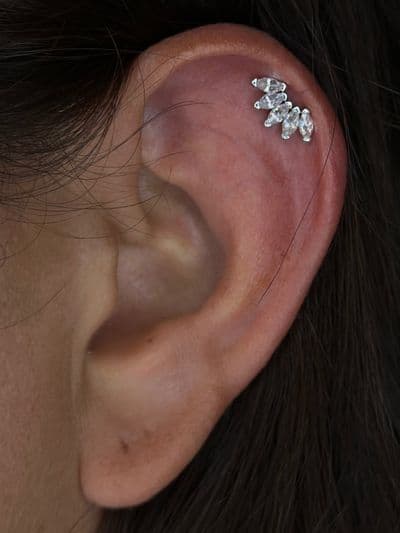
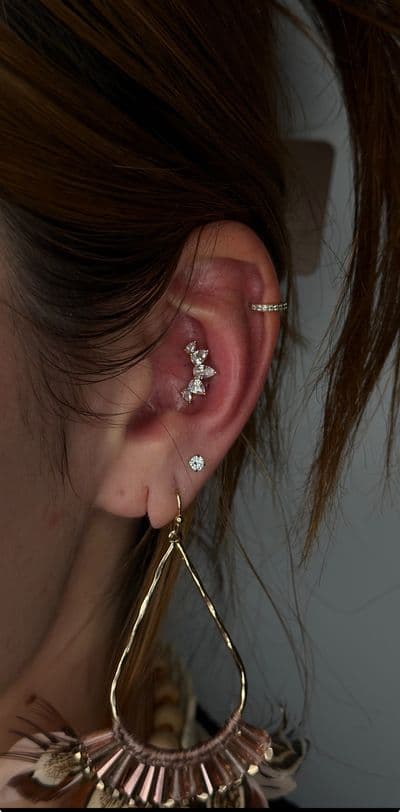
Because of where it sits, the daith is ideal for showing off jewelry with detail and character. While a helix piercing is visible from many angles, the daith rewards closer inspection — which is part of its appeal.
Jewelry Options for the Daith
Heart-shaped clickers. The most iconic daith jewelry — a clicker shaped like a heart that nestles perfectly in the inner cartilage fold. The heart clicker became synonymous with the daith piercing and remains wildly popular. Available in plain metal, gem-set, and ornate designs. If you picture a daith piercing, you're probably picturing this.
Circular hoops and seamless rings. A simple hoop in the right diameter creates an elegant, understated daith look. Seamless rings in 16g or 14g titanium or gold are a clean, minimal option that pairs well with other ear jewelry in a curated setup.
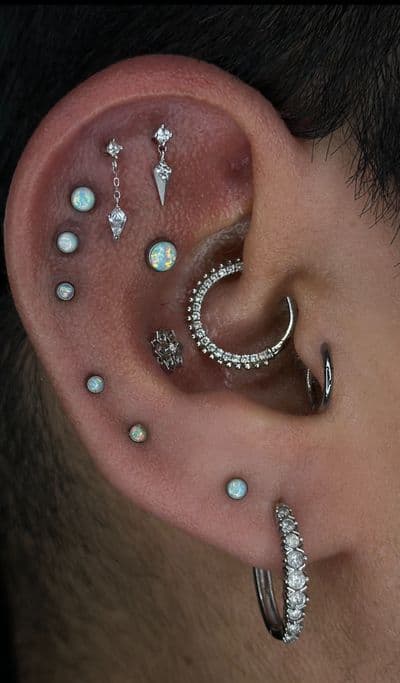
Decorative clickers. Beyond hearts, clicker-style jewelry comes in an enormous variety: floral designs, crescent moons, geometric shapes, ornate filigree. The hinged closure makes them practical (easy to get in and out after healing) and the daith's placement is a natural showcase for elaborate pieces.
Curved barbells (initial healing). For fresh piercings, a curved barbell is often the safest starting jewelry — it sits without pressure on the healing tissue and is easier to clean around than a tight ring. After the piercing is healed (typically 6+ months), you can downsize and switch to your preferred final jewelry.
The Healing Timeline
The daith is one of the slower-healing cartilage placements, and this deserves emphasis. The inner cartilage receives less blood flow than lobe tissue, the location makes it slightly harder to clean thoroughly, and the tight geometry means anything that puts pressure on the area — sleeping, earbuds, glasses frames — can slow the process.
Realistic healing expectations:
- 2–3 months: Surface redness and initial discharge should be subsiding
- 3–6 months: Externally it looks healed, but the inner tissue is still maturing
- 6–12 months: Full healing for most piercings, though some take a bit longer
The most common mistake: changing jewelry at 6–8 weeks because it "looks healed." Cartilage heals from the outside in — the outer surface may look fine while the inner tissue is still fragile. Changing jewelry too early is the primary cause of daith complications.
Aftercare Specifics
Daith aftercare follows the same fundamentals as other cartilage piercings — saline rinse 2x daily, no touching with unwashed hands, no rotating the jewelry, no submerging in pools, lakes, or hot tubs during healing. A few daith-specific notes:
Sleep positioning. Sleeping on a healing daith creates friction and pressure on the cartilage. Use a travel pillow with a hole in the center to keep pressure off the ear, or sleep on the opposite side.
Earbuds and headphones. In-ear buds shouldn't directly contact a healing daith, but be conscious of anything that sits in or around the ear. Over-ear headphones that clamp on the outer ear can create enough pressure to irritate inner cartilage piercings — minimize use in the first several months.
Phone use. Pressing your phone against a healing cartilage piercing introduces pressure and bacteria. Speakerphone or earbuds are better options during the healing period.
The Migraine Question: What the Evidence Actually Says
We need to address this honestly because some people come to us primarily interested in the potential migraine benefit rather than the piercing itself.
The theory: the daith piercing location corresponds to a pressure point used in acupuncture, and stimulating that point may trigger the vagus nerve or otherwise interrupt migraine patterns. It's been described as a form of permanent acupuncture.
The reality: there are no peer-reviewed, controlled clinical studies that have demonstrated a consistent therapeutic effect. The evidence is entirely anecdotal — collections of personal testimonials, some strongly positive, some reporting no change. The medical community, including headache specialists and neurologists, generally does not endorse the daith piercing as a migraine treatment.
What does this mean practically? If you get a daith hoping it will reduce your migraines, you may experience improvement (possibly placebo effect, possibly coincidence, possibly something real — we genuinely don't know), or you may experience no change. We won't promise therapeutic outcomes we can't guarantee.
If you'd love the piercing purely for aesthetic reasons and the migraine possibility is a bonus consideration — then you're in great shape. Come see us near North Star Mall. Service fees start at $35. Noah is happy to walk you through placement and jewelry options for your anatomy.
Frequently Asked Questions
Does a daith piercing actually help with migraines?
The evidence is anecdotal and not supported by controlled clinical studies. The theory is based on acupuncture pressure points, but no peer-reviewed research has confirmed a therapeutic effect. Some people report improvement; others report no change. If migraines are your primary reason for getting this piercing, we'd encourage managing expectations. If you love the jewelry and would get it anyway — then great.
How long does a daith piercing take to heal?
The daith is one of the slower-healing ear placements because of its inner cartilage location and the difficulty of keeping it clean. Expect 6–12 months for full healing, with many piercings taking the full year. Surface healing (no visible redness or discharge) typically occurs around 3–4 months.
Can I wear earbuds or headphones while my daith is healing?
Standard in-ear earbuds that sit in the ear canal won't interfere directly, but anything that sits over or in the outer ear can create pressure on a healing daith. Avoid over-ear headphones during the first few months and be mindful of anything that contacts the inner ear area.
What jewelry options work for a daith piercing?
The most popular styles are: curved barbells for initial healing, heart-shaped clickers (iconic for daith), circular hoops and rings, and decorative clickers with gems or intricate designs. The daith's inner cartilage placement makes it an ideal showcase for statement pieces.
Book Your Piercing
Walk-ins welcome for piercings. Book ahead to reserve your spot at Platinum Body Piercings.
📍 7400 San Pedro Ave, San Antonio, TX 78216