Gold vs Titanium Jewelry: Which Should You Choose for Your Piercing?
Gold and implant-grade titanium are the two gold standards in body piercing jewelry. Here's how to choose between them based on your healing stage, budget, and lifestyle.
Gold vs Titanium Jewelry: Which Should You Choose for Your Piercing?
Walk into Platinum Body Piercings near North Star Mall in San Antonio and ask Noah what jewelry he recommends for a new piercing. He'll tell you the same thing every professional piercer worth their salt tells you: implant-grade titanium or nickel-free gold. Those are the two options that matter.
But which one is right for you? The answer depends on where you are in the healing process, your skin's sensitivity, your budget, and honestly — what you find beautiful. Here's the breakdown.
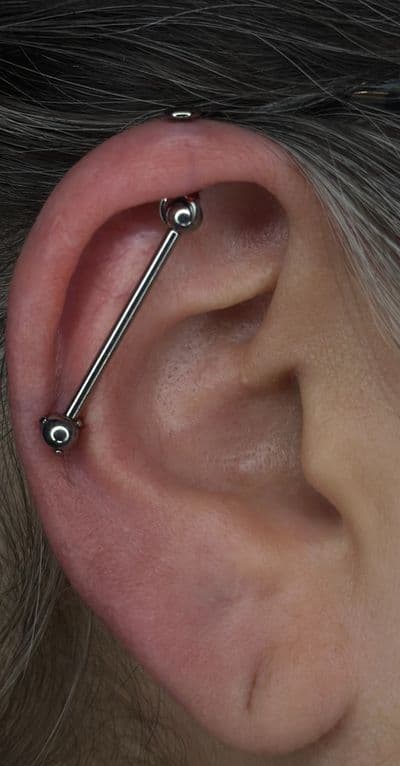
ASTM F-136 Titanium: The Professional Standard Explained
ASTM F-136 is a specification defined by ASTM International — the same material standard required for surgical implants used inside the human body. Titanium meeting this spec contains no nickel, no cadmium, no lead — none of the common irritants found in lower-grade metals. It's biocompatible: your body doesn't mount an immune response to it.
For piercing applications, F-136 titanium has several other advantages beyond biocompatibility:
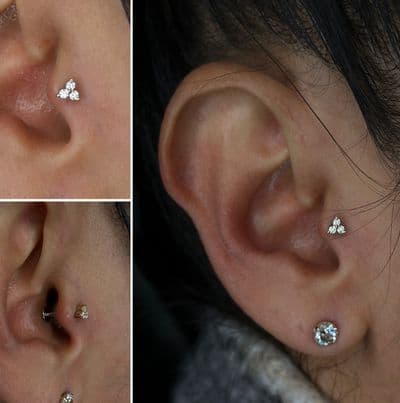
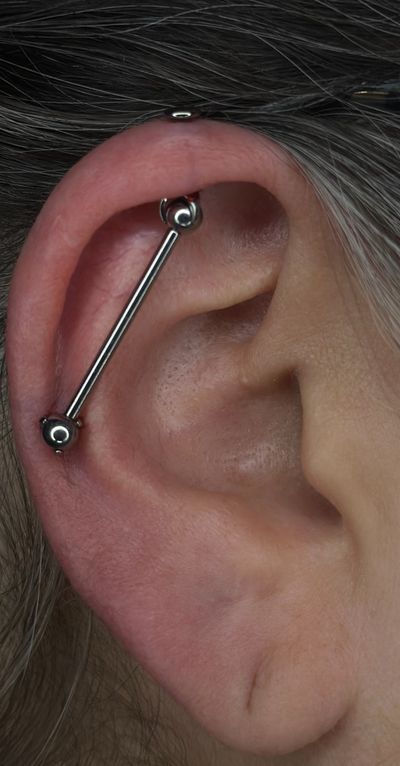
It's lightweight. Titanium is significantly lighter than gold or steel. For ear piercings especially, lightweight jewelry creates less downward pull on healing tissue — an important consideration for cartilage placements.
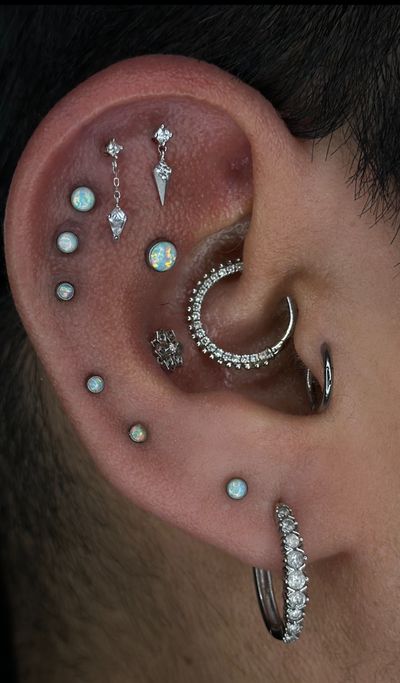
It can be anodized. Titanium's surface can be colored through anodization — an electrochemical process that creates an oxide layer in a range of colors: gold, rose gold, purple, blue, black, teal. These colors are not coatings or plating; they're part of the surface of the metal itself. The color doesn't chip, peel, or wear off. Anodized titanium lets you get the look of gold or colored metal at a significantly lower price point.
It's the most practical initial jewelry choice. For new piercings — especially in people who don't know if they have metal sensitivities — implant-grade titanium is the safest starting point. It gives the healing tissue the cleanest possible environment.
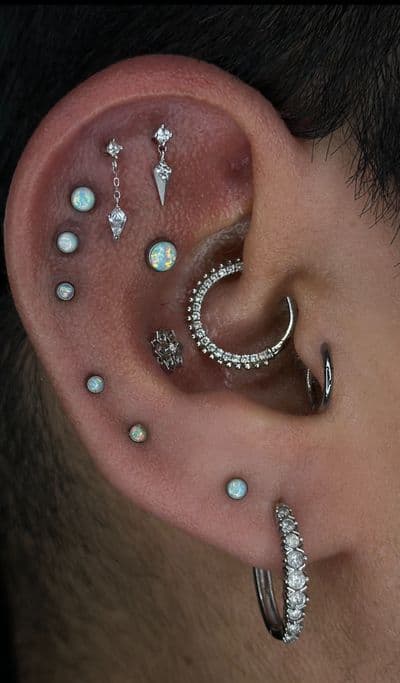
14k vs 18k Gold: What the Numbers Mean
Gold purity is measured in karats, where 24k is pure gold. Pure gold (24k) is too soft for jewelry — it bends and scratches too easily. Alloyed gold mixes pure gold with other metals to add hardness:
14k gold: 58.3% pure gold, 41.7% other metals. The most common choice for body jewelry in the US. Durable, less expensive than 18k, and when the alloy is nickel-free (which reputable studios ensure), fully safe for piercings. The slightly lower gold content gives it a slightly cooler, less saturated yellow tone.
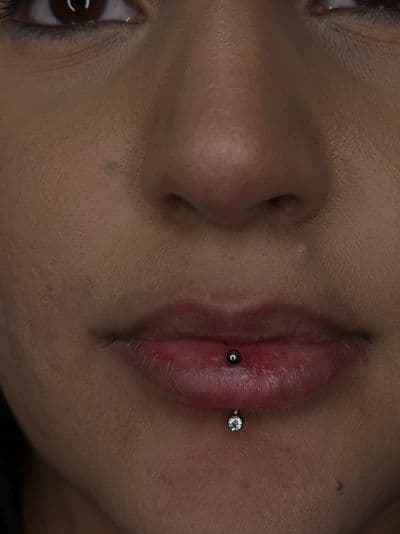
18k gold: 75% pure gold, 25% other metals. Richer, warmer color. More expensive. Slightly softer than 14k, which matters more for rings than posts. For piercing jewelry, 18k is the premium choice — visually indistinguishable from pure gold to most eyes, with the biocompatibility benefits of a high-purity alloy.
Gold-plated and gold-filled are NOT acceptable for piercings. Ever. Gold plating is a thin coat of gold over a base metal — that base metal is almost always a nickel alloy. As the plating wears, your tissue contacts the base metal. Gold-filled has a thicker gold layer but the same fundamental problem. The rule is simple: solid gold only, in nickel-free alloys.
Pricing Differences: What to Expect

Let's be honest about cost, because it matters to real people making real decisions:
Implant-grade titanium is generally the most accessible option. A quality threadless titanium flatback with a simple end (disc, gem, or basic shape) typically runs $25–$60 depending on the end style. Titanium is the entry point for high-quality body jewelry — you're not sacrificing safety or quality by choosing it over gold.
14k gold starts higher — typically $60–$150+ for simple pieces, and substantially more for gem-set or ornate designs from premium brands like Tawapa or Anatometal. Gold pricing reflects the metal's intrinsic value and the craftsmanship involved.
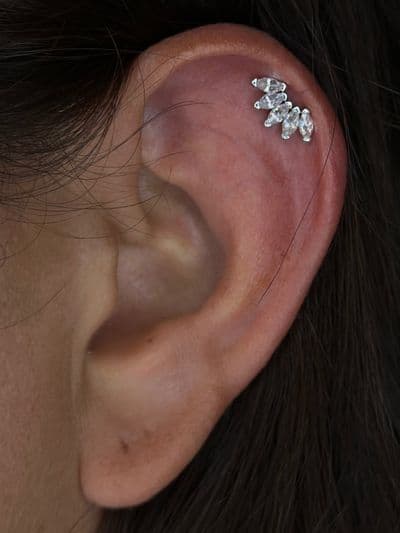
18k gold runs 20–40% more than comparable 14k pieces, depending on the maker.
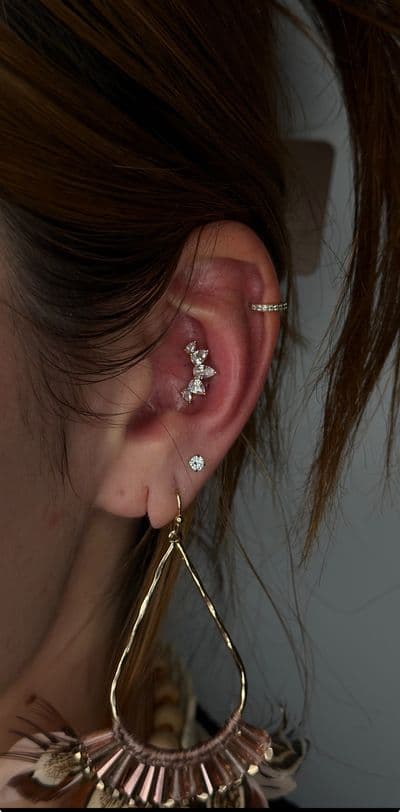
One practical middle path: implant-grade titanium anodized to look gold gives you the gold aesthetic at titanium prices — without any compromise on safety. It's what we recommend for clients who love the gold look but aren't ready to invest in solid gold.
When to Upgrade Your Jewelry
If you're currently wearing mystery-alloy jewelry from a mall kiosk or fast-fashion retailer in your piercings — the answer is "upgrade now," regardless of where you are in the healing process. Unknown alloys are the #1 cause of unexplained piercing irritation in people who think their piercings "just don't heal well." Often the problem isn't your body; it's the metal.
For people with healthy healed piercings looking to go from titanium to gold: come in for a jewelry change appointment. Noah will check the piercing, confirm it's ready for a change, and help you select a piece that fits your anatomy and style. The upgrade process is simple and the difference in how high-quality gold sits and looks is immediately noticeable.
We carry jewelry from Tawapa, NeoMetal, Anatometal, and other trusted brands in both titanium and gold. Service fees start at $35. Find us near North Star Mall in San Antonio.
Frequently Asked Questions
What is ASTM F-136 titanium and why does it matter?
ASTM F-136 is the industry specification for implant-grade titanium — the same material standard used in surgical implants. It contains no nickel and is biocompatible, meaning your body doesn't react to it. This is the minimum material standard for any initial piercing jewelry. If a studio can't tell you the material grade of their jewelry, that's a red flag.
Is 14k gold safe for a new piercing?
Yes — as long as it's nickel-free 14k or 18k solid gold (not gold-plated, not gold-filled). Most reputable piercing studios use nickel-free alloys specifically. Gold-plated jewelry is never appropriate for piercings — the plating wears off and the base metal can cause reactions.
Can I switch from titanium to gold after my piercing heals?
Absolutely — this is actually a very common upgrade path. Many clients start with titanium for initial healing (lower cost, very biocompatible) and switch to gold pieces once healed. Come in for a jewelry change appointment and we'll fit you with something beautiful.
Why do some people react to jewelry labeled "surgical steel"?
Surgical steel (316L or 316LVM) typically contains 2–3% nickel. For people with nickel sensitivity — which is surprisingly common — this is enough to cause irritation, itching, or prolonged healing issues. Titanium and nickel-free gold are the safe alternatives for reactive skin.
Book Your Piercing
Walk-ins welcome for piercings. Book ahead to reserve your spot at Platinum Body Piercings.
📍 7400 San Pedro Ave, San Antonio, TX 78216