Nostril Piercing: The Complete Guide from an Expert Piercer
The nostril piercing is one of the most popular piercings in the world — and one of the most nuanced. Here's everything you need to know before you get yours.
The nostril piercing is one of the oldest forms of body adornment in human history — and in 2026, it's still one of the most requested piercings we do at Platinum Body Piercings. It's subtle enough for work, versatile in jewelry style, and heals relatively predictably when done right. But "done right" is doing a lot of work in that sentence. Nostril piercings are notorious for complications when the initial jewelry is wrong, placement is off, or aftercare is neglected. This guide covers everything, from the types of nostril piercings to the correct aftercare protocol.Nostril Piercing: The Complete Guide from an Expert Piercer
Types of Nostril Piercings
Standard Nostril Piercing
The most common nose piercing. Placed through the soft tissue of the nostril, in the natural crease where the nostril meets the face. The placement should follow the natural curve of the nose for the most flattering result.
- Healing time: 4–6 months surface, 6–12 months full
- Pain level: ⭐⭐ (2/5) — brief pinch, eye watering is common and normal
- Best initial jewelry: Flat-back labret stud (titanium)
High Nostril Piercing
Placed higher on the nose than the standard placement — above the natural crease, on the harder cartilaginous portion of the nostril. This creates a stacked or elongated look when combined with a standard nostril piercing.
- Healing time: 6–12 months (cartilage heals slower)
- Pain level: ⭐⭐⭐ (3/5) — more intense due to the harder tissue
- Best initial jewelry: Flat-back labret stud only — hoops cannot fit due to anatomy
- Important: Not all nose shapes support high nostril piercings. Your piercer will assess.
Double Nostril Piercing
Two piercings on the same nostril, creating a stacked look. Can be done in one session if anatomy allows. The most important factor is spacing — piercings placed too close together look crowded; too far apart looks unintentional.
- Healing time: Same as standard, though two piercings mean more to manage
- Pain level: ⭐⭐ per piercing
- Tip: Start with one, let it heal, then add the second — easier to heal and placement can be dialed in around the first.
Bilateral / Both Nostrils
One piercing on each nostril. A balanced, symmetrical look. Both can be done in the same session. Start with the side you sleep on less if you're concerned about healing one side faster.
Jewelry Guide
For New Piercings
Flat-back labret stud (titanium): This is what we recommend for every new nostril piercing. The flat disc on the inside prevents the jewelry from being pulled through, the external thread-free design prevents bacteria buildup, and implant-grade titanium is the most biocompatible option available.
Initial jewelry is longer than your final jewelry to accommodate swelling. Once healed, you'll be downsized to a shorter post that sits flush.
Jewelry to Avoid for New Piercings
- ❌ Nose screws (L-shaped or corkscrew): Hard to insert and remove, create irritation at the exit point
- ❌ Rings/hoops: Move too much during healing, increase healing time, promote irritation bumps
- ❌ Mystery metal: If the metal type isn't specified or isn't implant-grade, it's not going in your face
- ❌ Anything plated or coated: The coating wears off and the base metal can cause reactions
Once Healed: Your Options
- Seamless hoops or clicker rings: The classic "nose ring" look
- Flat-back studs: Discreet, professional, elegant
- Hinged segment rings: Easy to put in and take out once healed
- Solid gold pieces: 14k or 18k yellow, rose, or white gold studs and rings
Healing Timeline
| Phase | Timeline | What to Expect |
|---|---|---|
| Initial inflammation | Days 1–14 | Swelling, redness, tenderness. Normal. Keep it clean. |
| Early healing | Weeks 2–8 | Crusties forming. Occasional discharge. May look mostly healed. Is not. |
| Middle healing | Months 2–4 | Outward appearance settled. Interior tissue still forming. |
| Late healing | Months 4–6+ | Feels solid. Still fragile — don't change jewelry without professional help. |
| Fully healed | 6–12 months | Ready for jewelry changes. Still use quality metals. |
Aftercare Protocol
The Basic Routine
- Rinse with sterile saline (NeilMed Wound Wash) twice daily
- Gentle spray — don't aggressively clean around the jewelry
- Let it air dry, or gently pat with clean paper towel
- Don't rotate, twist, or touch
What to Avoid
- No makeup near the piercing during healing
- No submerging in pools, lakes, hot tubs
- No blowing your nose forcefully immediately post-piercing
- Blow carefully during healing — significant force can irritate the piercing
- Avoid touching the piercing with unwashed hands
Common Problems and How to Fix Them
Irritation Bump
Looks like: A small raised bump next to the piercing, often mistaken for a keloid.
Cause: Usually wrong jewelry, sleeping on the piercing, bumping it, or moisture trapped against the site.
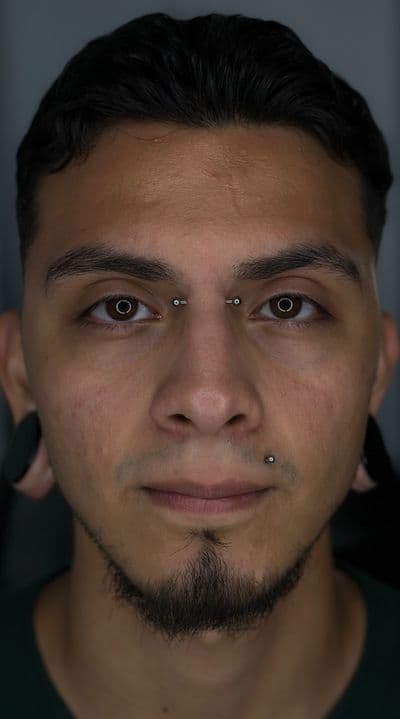
Fix: Switch to implant-grade titanium if you haven't. Review your aftercare. Come see your piercer — we can assess whether it's an irritation bump (treatable) or something that needs closer attention.
Prolonged Healing
Cause: Anatomy, lifestyle factors (moving jewelry, touching it, sleeping on it), suboptimal jewelry material.
Fix: Review aftercare practices. Come in for a check-up. We may recommend a jewelry change or additional guidance.
"It Looks Healed But..."
Nostril piercings are notorious for looking fully healed externally while still being quite fragile internally. Changing to a poorly fitting piece or low-quality metal can set healing back significantly even at 4–5 months. Wait the full healing period and have a professional make your first jewelry change.
Have questions or think something's off with your healing? Come see us at Platinum Body Piercings, North Star area, San Antonio. We offer complimentary healing check-ins for our clients.
Frequently Asked Questions
How long does a nostril piercing take to heal?
The surface of a nostril piercing heals in 4–6 months. Full healing typically takes 6–12 months. Even when it looks and feels healed, the interior tissue is still maturing. Changing jewelry too early is one of the top causes of complications.
What is the best jewelry for a new nostril piercing?
Implant-grade titanium flat-back labret studs are the gold standard for initial nostril piercings. They sit flush against the skin, are easy to clean, and made from a material that virtually nobody reacts to. Avoid nose screws and L-shaped posts for initial piercings.
Does a nostril piercing hurt?
Nostril piercings typically cause a brief sharp pinch and often trigger an involuntary eye water response — this is a nerve reflex, not because it's agonizingly painful. Most clients rate nostril piercings 2–3 out of 10 on the pain scale.
Can I get a double nostril piercing at once?
Yes — both nostrils can be pierced in the same session, or two piercings on the same nostril if anatomy supports it. We recommend having a consultation first to discuss placement that will look intentional and balanced.
What is a high nostril piercing?
A high nostril piercing is placed higher on the nose than a standard nostril — above the natural crease of the nostril, closer to the bridge. It creates a unique look and is often done in multiples for a stacked effect.
Book Your Piercing
Walk-ins welcome for piercings. Book ahead to reserve your spot at Platinum Body Piercings.
📍 7400 San Pedro Ave, San Antonio, TX 78216