How to Take Care of Your New Piercing: The Complete Aftercare Guide
You got the piercing — now what? Here's the complete aftercare guide: exactly what to do, what to avoid, and how to tell the difference between normal healing and something that needs attention.
The piercing is done. The hard part's over — except now you have weeks or months of healing ahead, and what you do during that period determines whether you end up with a clean, beautiful piercing or a prolonged mess of irritation bumps and setbacks. The good news: proper aftercare is genuinely simple. It does not require expensive products, elaborate routines, or constant attention. It requires saline, patience, and leaving the piercing alone. Here's the complete guide from the team at Platinum Body Piercings.How to Take Care of Your New Piercing: The Complete Aftercare Guide
The Core Principle: Clean and Leave It Alone
The number one mistake people make with new piercings is over-cleaning and over-touching. Your body knows how to heal. Your job is to provide a clean environment and then stay out of the way.
The full aftercare routine:
- Rinse with sterile saline twice daily (morning and night)
- Gently remove any dried discharge (crusting) during your rinse
- Let the piercing air dry, or gently pat dry with a clean paper towel
- Leave it alone for the rest of the day
That's it. That's the whole routine.
What to Use: NeilMed Wound Wash
NeilMed Wound Wash Saline is the product recommended by the Association of Professional Piercers (APP) and the industry standard for piercing aftercare. It's a sterile isotonic saline solution in a convenient spray bottle.
Why NeilMed specifically:
- Sterile (bottled under pressure, stays sterile)
- Correct salt concentration (0.9% — matches your body's natural fluids)
- No additives, preservatives, or active ingredients that could irritate tissue
- Easy spray application — you don't have to touch the piercing
Available at most pharmacies and Walmart for about $10. One bottle lasts months.
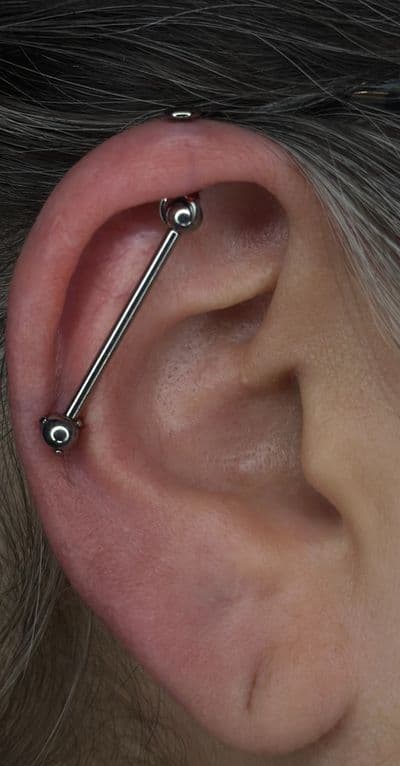
What about homemade salt water? Don't. The salt concentration is difficult to get right, and tap water isn't sterile. Commercial sterile saline is the correct tool. It's $10.
How to Clean Different Piercing Locations
Ear Piercings (Lobe and Cartilage)
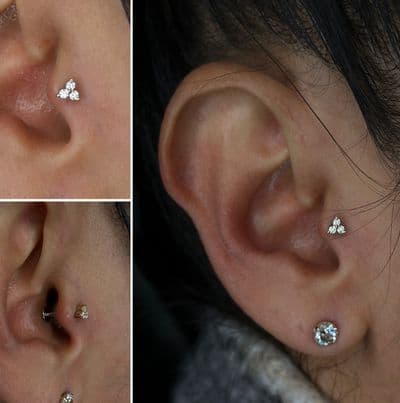
Spray saline directly on the front and back of the piercing. Let it soak for 30 seconds, gently rinse with warm water (in the shower works great), pat dry with clean paper towel. Done.
Nostril and Facial Piercings
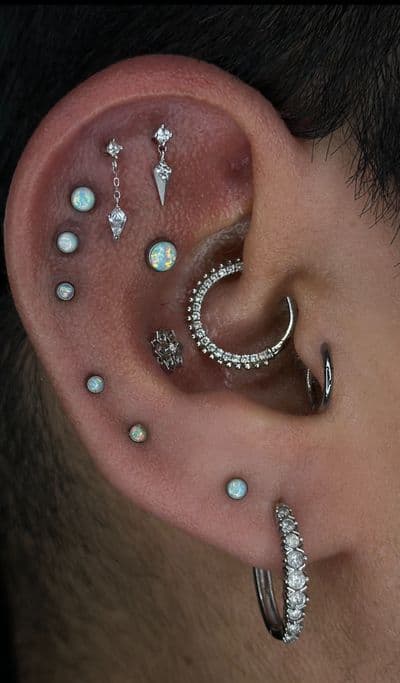
Spray saline on the external side. For internal surface (inside the nostril), tilt your head back and spray gently into the nostril, let it drain out. No scrubbing. No Q-tips (cotton fibers catch on the jewelry).
Septum Piercing
Tilt your head down over a sink. Spray saline up each nostril and let it drain through. Alternatively, fill a small cup with saline and dip your nose briefly. Air dry or gently pat.
Navel Piercings
Stand or sit and spray saline directly on the piercing. Let it soak, rinse gently with warm water in the shower. Dry thoroughly — navel piercings are prone to moisture accumulation, which slows healing.
Oral Piercings (Tongue, Lip)
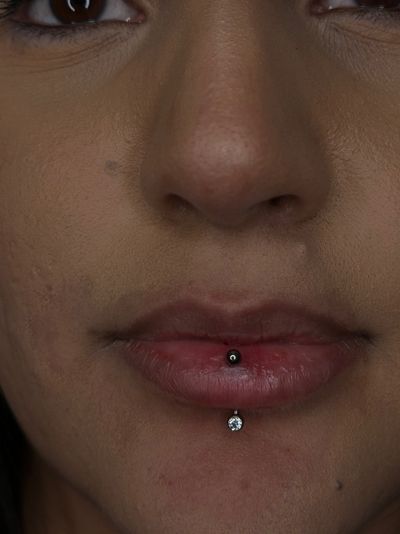
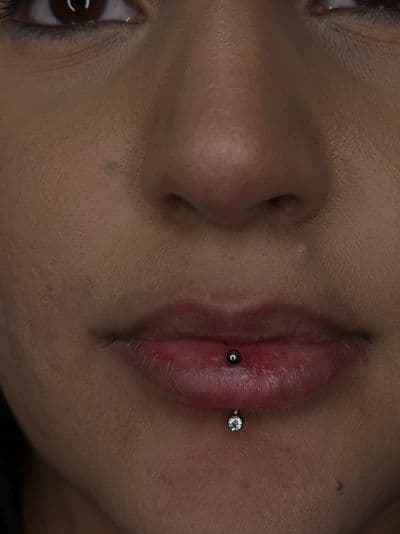
Rinse with alcohol-free mouthwash (like Biotène) after meals and before bed. Avoid regular Listerine — the alcohol is too harsh. Ice helps with initial swelling on tongue piercings.
What NOT to Do
- ❌ No hydrogen peroxide: Kills healthy cells, delays healing
- ❌ No rubbing alcohol: Same issue — too harsh
- ❌ No Bactine or Betadine: Antiseptic products are for wounds, not healing piercings
- ❌ No antibiotic ointments (Neosporin, Bacitracin): Can cause allergic reactions, trap moisture, and prevent the skin from breathing
- ❌ No tea tree oil: Commonly recommended on internet forums; actually too harsh and commonly causes reactions
- ❌ No rotating or twisting the jewelry: This is old advice that disrupts the healing channel forming around the jewelry
- ❌ No touching with unwashed hands
- ❌ No submerging in pools, oceans, or hot tubs until fully healed
- ❌ No makeup, skincare products, or hair products directly on a healing piercing
Sleeping Positions for Ear Piercings
If you have a new cartilage piercing — helix, tragus, daith, conch, or any upper ear placement — sleeping on it is the most common cause of prolonged healing and irritation bumps.
Solutions:
- Travel pillow: The donut-shaped U-pillow for car/airplane travel. Put your ear in the hole. Problem solved.
- Sleep on the opposite side: Simplest solution if you have a single piercing.
- Flat pillow with a gap: Fold a pillow to create a gap for your ear to rest in.
For lobe piercings, sleeping on a clean pillowcase is usually fine. Change your pillowcase more frequently than usual during healing — pillowcases accumulate bacteria and hair products.
Healing Timelines by Location
| Piercing | Surface Healing | Full Healing |
|---|---|---|
| Earlobe | 6–8 weeks | 3–6 months |
| Helix / Cartilage | 3–4 months | 6–12 months |
| Daith / Rook / Conch | 4–6 months | 9–12+ months |
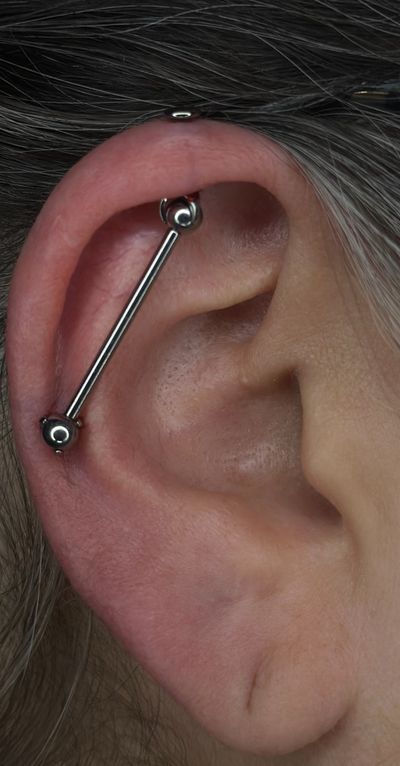
| Industrial | 6–9 months | 12–18 months |
| Nostril | 3–4 months | 6–12 months |
| Septum | 6–8 weeks | 6–8 months |
| Navel | 6–9 months | 9–12 months |
| Tongue | 4–8 weeks | 3–6 months |
These are ranges, not guarantees. Your individual healing depends on your health, immune system, anatomy, aftercare compliance, and lifestyle factors.
Signs of Normal Healing vs. Signs of Trouble
Normal Healing
- Mild redness and swelling in the first 1–2 weeks
- Clear to slightly white crusties (dried lymph fluid) — this is not pus
- Mild tenderness when bumped or touched
- Occasional itching as tissue regenerates
- Slight bruising directly after some piercings

Irritation (Common — Treatable)
Irritation bumps are the most commonly misidentified piercing problem. They look alarming but they're usually caused by:
- Wrong jewelry (wrong material, wrong size, rough threading)
- Sleeping on the piercing
- Catching or bumping the jewelry repeatedly
- Over-cleaning
- Using irritating products near the piercing
What it looks like: A small raised bump (pustule or flat lump) directly adjacent to the piercing hole. Not warm, not spreading.
Fix: Identify and eliminate the cause. Often resolved by switching to correct implant-grade jewelry and optimizing aftercare. Come see your piercer — they've seen it a thousand times and can tell you exactly what's causing it.
True Infection (Less Common — See a Doctor)
True piercing infections are less common than internet forums suggest, but they do happen. Signs of infection:
- Spreading redness that extends noticeably beyond the piercing site
- Significant warmth to the touch
- Thick, yellow or green pus (not clear discharge)
- Increasing pain over days, not decreasing
- Fever, chills, or flu-like symptoms
If you think you have an infection, see a doctor. Don't remove the jewelry first — removing it traps the infection inside the tissue. Antibiotics are the appropriate treatment. Come see us first if you're not sure; we can assess whether what you're seeing is infection or irritation.
Questions? We offer complimentary healing check-ins for our clients. Come by Platinum Body Piercings in San Antonio anytime. Healthy healing is part of what you paid for.
Frequently Asked Questions
What saline solution should I use on my piercing?
NeilMed Wound Wash (sterile saline) is the industry standard recommended by professional piercers. It's the right salt concentration, sterile, and comes in a convenient spray. Avoid homemade salt water — the concentration is usually wrong and it's not sterile.
Can I use alcohol or hydrogen peroxide to clean my piercing?
No. Both alcohol and hydrogen peroxide are too harsh — they kill the healthy cells you need for healing, not just bacteria. The same goes for Bactine and Betadine. Sterile saline is all you need.
How do I sleep with a new ear cartilage piercing?
Use a travel pillow (the U-shaped kind for car or airplane travel) with your ear in the hole. This keeps pressure off the piercing while you sleep. Alternatively, sleep on the opposite side until it heals.
How do I know if my piercing is infected?
True infection shows spreading redness beyond the piercing site, warmth, thick yellow/green pus, and sometimes fever or flu-like symptoms. Irritation (much more common) shows a bump near the piercing, mild discharge, and tenderness. Most "infected" piercings are actually just irritated. See your piercer first — they can tell the difference.
When is my piercing fully healed?
Healing varies by location. Earlobes: 6–8 weeks. Nostril: 6–12 months. Cartilage piercings: 6–12+ months. Septum: 6–8 months. The inside heals slower than the outside — when it looks and feels healed, it usually still needs more time. When in doubt, ask your piercer before changing jewelry.
Book Your Piercing
Walk-ins welcome for piercings. Book ahead to reserve your spot at Platinum Body Piercings.
📍 7400 San Pedro Ave, San Antonio, TX 78216