Septum Piercing: Everything You Need to Know Before Getting One
The septum piercing is one of the most dramatic yet reversible piercings you can get. Here's the full guide — including how to hide it for work.
The septum piercing has been worn across human cultures for thousands of years — by warriors, royalty, and everyday people who liked the way it looked. Today it's having a particular cultural moment, appearing on everyone from corporate professionals (flipped up during the workday) to musicians to people who just think it looks cool. At Platinum Body Piercings, we do a lot of septum piercings, and we do them correctly. Here's everything you need to know.Septum Piercing: Everything You Need to Know Before Getting One
The Sweet Spot: What It Is and Why It Matters
The septum has two zones of tissue:
- The cartilage: Hard, thick, takes forever to heal, and hurts significantly more to pierce through. You don't want this.
- The sweet spot (columella): The thin, soft membrane just below the cartilage, between the two cartilage walls. This is where a septum piercing belongs.
A skilled piercer will locate the sweet spot before touching a needle to your nose. They'll feel for it, confirm placement, and only proceed when the location is correct. An inexperienced piercer rushes this step and hits cartilage — which is where the horror stories about septum piercings being "extremely painful" come from.
When pierced correctly through the sweet spot, most clients describe the sensation as a brief sharp pinch followed by involuntary eye watering — a nerve reflex, not extreme pain. The eye water happens almost every time and doesn't mean it was worse than expected.
Anatomy Check
Not everyone's sweet spot is in the same location, and in some cases a deviated septum or unusual anatomy makes certain placements challenging. Your piercer will do a brief anatomical assessment before piercing. If they don't, ask why.
Pain Expectations
- Sweet spot piercing: 2–3/5. Brief, sharp, eye-watering, done in a second.
- Cartilage piercing (wrong placement): 5–7/5. Avoid this. This is why piercer selection matters.
- Aftereffects: Mild tenderness for 1–3 days. Some people feel nothing the next day; others are sore for a few days. Normal range.
Initial Jewelry Options
Horseshoe Barbell (Circular Barbell)
The most versatile initial option. The U-shaped design allows the jewelry to be flipped up into the nostrils to hide the piercing. Start here if discretion matters. Material: implant-grade titanium or solid gold.
Clicker Ring
A hinged hoop with a click-closure. Easier to open and close than seamless rings. Not ideal for very new piercings (a little fiddly), but great once you're through initial healing.
Seamless / Segment Ring
A continuous ring where a small section is removed for insertion. Sleek, minimal look. Not flippable.
Retainer
A clear or flesh-colored piece designed to be invisible. If you need to hide the piercing during healing, a retainer is the discreet option. Note: plastic retainers should only be used temporarily in healed piercings — not for healing.
Flipping Up for Work (or Life)
One of the septum's biggest selling points: with a horseshoe barbell, you can flip the jewelry up into your nostrils. When flipped, it's invisible — completely undetectable unless someone is literally looking up your nose.
How to flip it: Gently grip both ball ends of the horseshoe and rotate the U upward into the nostrils. Both balls should rest just inside the nostril openings, out of sight. To flip down: reverse the process. It takes practice — takes most people a few days to get comfortable.
During healing: Minimize flipping up and down until you're past the initial healing phase (2–3 months). Excessive movement disrupts healing. If you must hide it frequently early on, talk to your piercer about a retainer for your initial jewelry.
Healing Timeline
| Phase | Timeline | Notes |
|---|---|---|
| Initial healing | Weeks 1–8 | Tenderness, discharge, sensitivity. Normal. |
| Early healed | Months 2–4 | Feels comfortable most of the time. Still fragile. |
| Mostly healed | Months 4–6 | Can tolerate jewelry changes with care. Tissue still maturing. |
| Fully healed | 6–12 months | Ready for any jewelry style. Treat it right and it'll last forever. |
When Can You Change the Jewelry?
The most common question we get. Our answer is always: when it's healed, not when it looks healed or feels healed.
Septum tissue matures from inside out. Surface healing happens in 6–8 weeks. The deeper tissue takes months longer. A premature jewelry change — especially to a lower quality material — can set the healing back to square one.
Come see us for your first change. We'll assess whether it's ready, size the new jewelry correctly, and make the swap safely. It takes 5 minutes and it's worth it.
Aftercare Protocol
- Sterile saline rinse twice daily (NeilMed Wound Wash)
- You can tilt your head back, spray, let it rinse through, and air dry
- Don't clean the inside of your nostrils aggressively — gentle spray is enough
- Don't use Q-tips or cotton to clean around the jewelry — fibers catch
- Blow your nose gently during healing
- Avoid submerging in pools or natural water
- Don't use hydrogen peroxide, alcohol, or Bactine
What If I Don't Like It?
The septum piercing is one of the most reversible facial piercings. Remove it once healed, the tissue closes, and in most cases leaves minimal evidence it was ever there. This is a major reason people who are "piercing curious but commitment-shy" often start here.
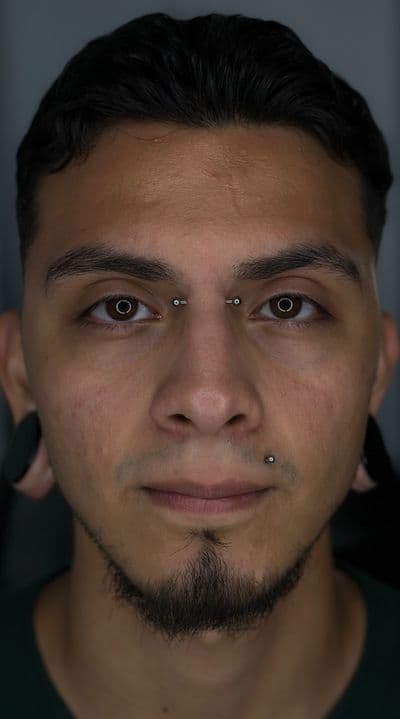
Ready? Come see us at Platinum Body Piercings in San Antonio. Your piercer will take the time to find your sweet spot, size your anatomy, and put in jewelry that's right for your face. Walk-ins welcome.
Frequently Asked Questions
Does a septum piercing hurt a lot?
Septum piercings have a reputation for being painful, but the reality is more nuanced. When pierced correctly through the "sweet spot" (the thin tissue below the cartilage), it's a brief sharp pinch that causes involuntary eye watering. Most clients rate it 2–3/10. Pierced through cartilage, it's much more intense — which is why piercer skill and placement matter enormously.
Can I flip my septum piercing up to hide it?
Yes — septum piercings are uniquely reversible compared to most piercings. A horseshoe barbell can be flipped up into the nostrils and becomes completely invisible. This is one of the reasons septum piercings are popular with people who need a more conservative appearance at work.
How long does a septum piercing take to heal?
Septum piercings typically heal in 6–8 months, though some take up to a year. Surface healing (feeling comfortable) happens faster — often 2–3 months. Full tissue maturation takes longer.
What size ring do I need for a septum piercing?
Initial piercings are typically done at 16g or 14g. A standard horseshoe ring for a septum is 8mm diameter for most anatomies. Your piercer will measure your anatomy during the piercing to select the right size.
Can a septum piercing be removed permanently?
Yes. If you remove a septum piercing and it's fully healed, it will close. The sweet spot tissue heals cleanly, often leaving minimal to no scarring. This makes septum piercings one of the most commitment-light facial piercings.
Book Your Piercing
Walk-ins welcome for piercings. Book ahead to reserve your spot at Platinum Body Piercings.
📍 7400 San Pedro Ave, San Antonio, TX 78216