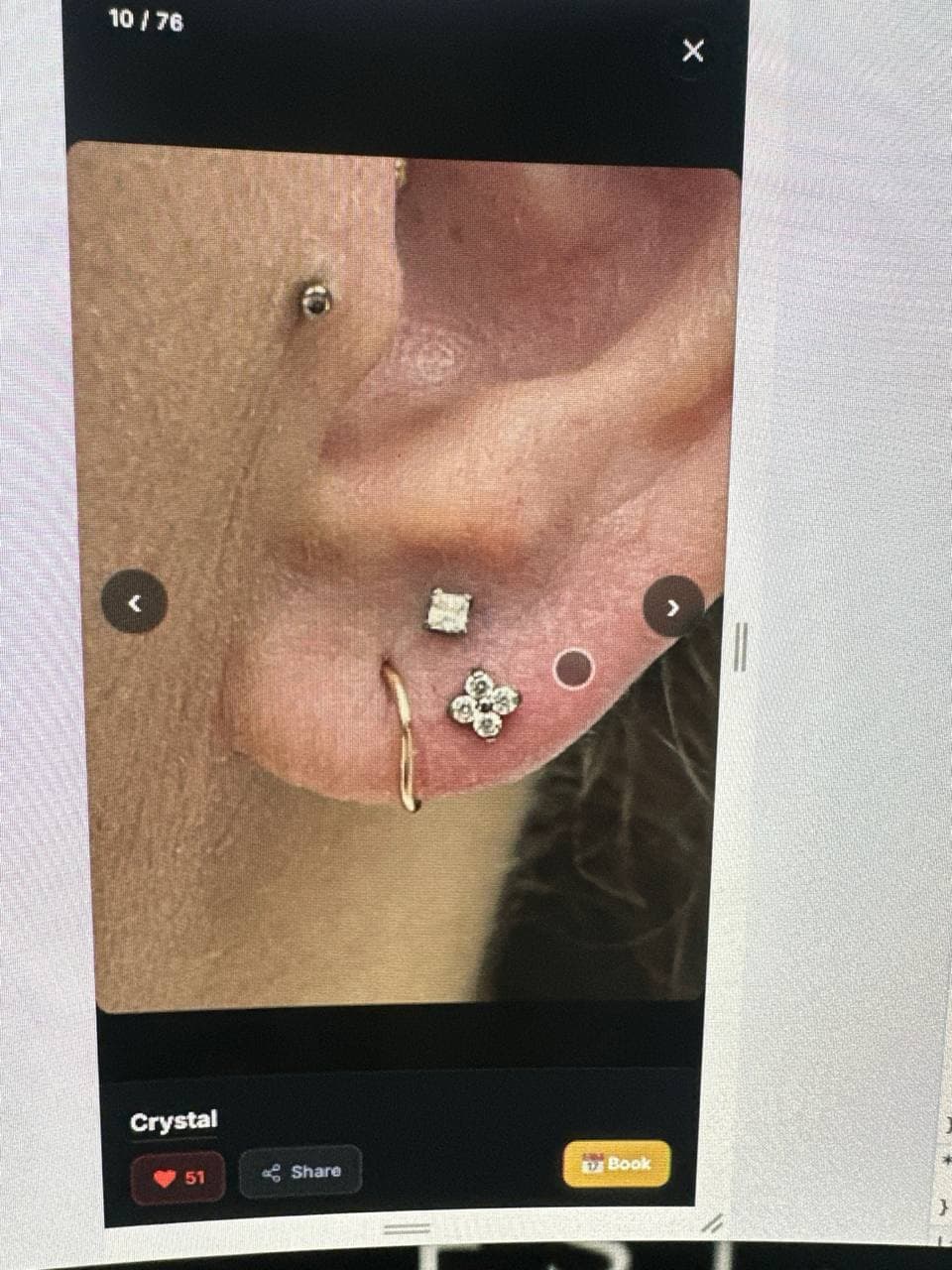
The 3-Step Routine
Twice a day. Every day. Until fully healed.
Week 5-6: Come back for your downsize. That longer bar was for swelling - it needs to be swapped now. Why this matters →
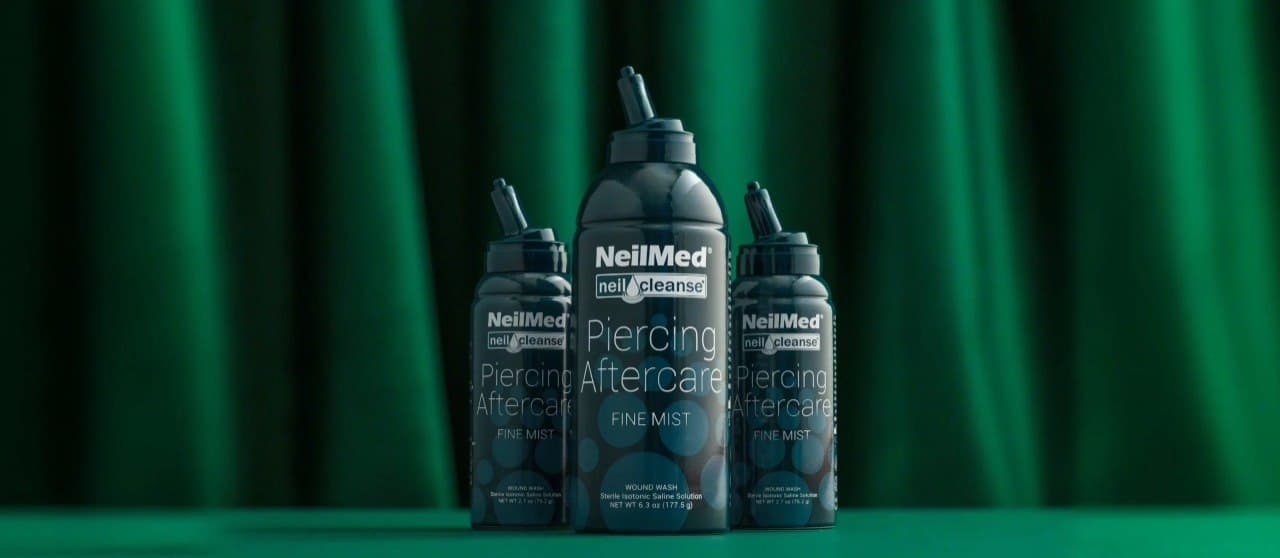
What to Use for Aftercare
What's Normal During Healing
What to Avoid
- Alcohol, hydrogen peroxide, Bactine, Neosporin - all damage healing tissue
- Rotating or twisting the jewelry - this is a myth that causes real damage
- Pools, hot tubs, lakes, rivers, bathtubs, or any other bodies of water during healing
- Makeup, hairspray, perfume, or lotion on or near the piercing site - could cause irritation
- Sleeping directly on ear piercings - use a travel pillow with your ear in the center hole
- Over-cleaning - 2x daily is exactly right. If the piercing is exposed to dirt or any filth, clean it immediately with saline.
- Changing jewelry early - wait until your piercer clears you. Changing too early can cause piercing bumps (irritation bumps).
Week 5-6: Come Back for Your Downsize
The initial jewelry is longer to accommodate swelling. Once swelling is gone, that extra length becomes a problem - it catches on things, creates irritation bumps, and slows healing. Your piercer swaps it for a shorter post that fits properly. 5 minutes. Don't skip it.
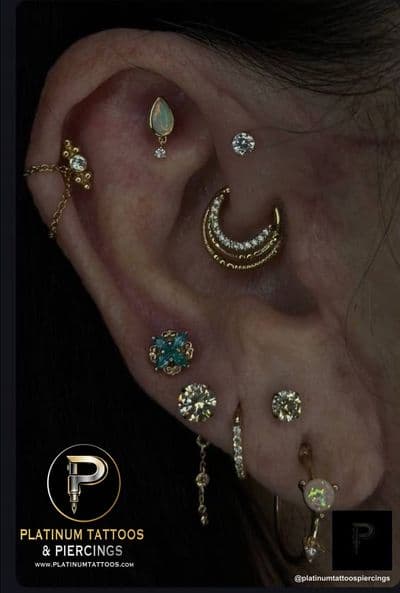
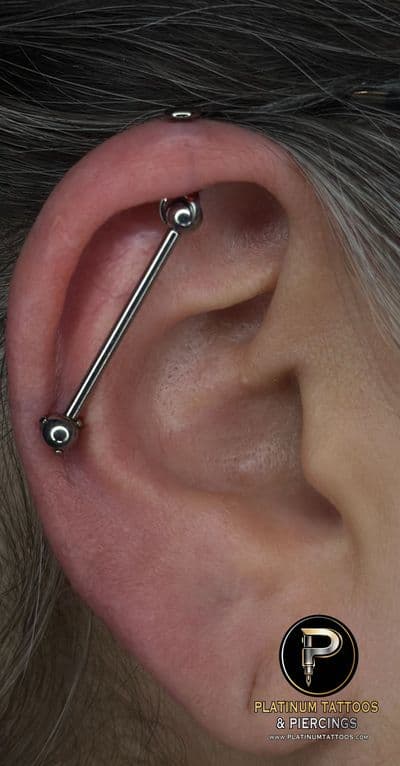
Healing Times by Piercing Type
Piercing Aftercare - Common Questions
There's a bump next to my piercing. What is it and what do I do?
Most bumps near a healing piercing are irritation bumps - not infections. They're caused by pressure, snagging, poor jewelry fit, or skipping your downsize. To fix it: identify and remove the cause. Downsize if you haven't already. Switch to implant-grade jewelry if you're not already using it. Clean 2x daily with sterile saline and stop over-cleaning. Most irritation bumps resolve within 4-8 weeks once the cause is removed. If the bump is hot, swollen, and producing green or foul-smelling discharge, come in - that's an infection.
Is the white/yellow crust on my piercing normal?
Yes. That crusty buildup is lymph fluid - your body's natural healing response. It's completely normal. Gently remove it during your saline spray routine. Do not pick it off dry. It is not pus, it is not an infection. If the discharge becomes green, thick, or foul-smelling, that's different - come in.
Can I swim with a new piercing?
Not recommended. Pools, hot tubs, lakes, and oceans introduce bacteria and chemicals that disrupt healing. If you must swim, use a waterproof bandage over the piercing and rinse with saline immediately after. Wait until fully healed before regular swimming.
My jewelry fell out. What do I do?
Act fast - piercings can close quickly, especially fresh ones. If your threadless top fell out, reinsert the pin with a slight bend and push it back into the post. If the whole piece came out, try to reinsert gently. If you can't get it back in within an hour, come in. Don't force it and don't use a random earring as a placeholder.
How do I know if my piercing is infected vs just irritated?
Irritation: redness, swelling, clear or whitish-yellow crust, soreness. Common and manageable. Infection: hot to the touch, intense throbbing pain, thick green or yellow pus, spreading redness, fever. Infections require medical attention - don't just leave it. When in doubt, come in and let your piercer look at it.
Can I change my jewelry early?
No. Changing jewelry before a piercing is healed can cause it to close, get irritated, or introduce bacteria. Wait until your piercer clears you. For most placements, that's at the downsize appointment (5-6 weeks) and then again after full healing. If you want different jewelry, come in and let your piercer do the swap.
My piercing was fine for months and now it's sore. Why?
This is called a healing regression and it's more common than people think. Causes: snagging on clothing or hair, sleeping on it wrong, change in products (new shampoo, conditioner, makeup near the piercing), stress, illness, or hormonal changes. Go back to basic aftercare - saline 2x daily - and identify the irritation source. Most regressions clear up in 1-2 weeks.
How long does a nostril piercing take to heal completely?
3-6 months on average, but everyone heals differently. The surface may feel healed well before the internal tissue is ready. Keep cleaning through the full period. Come back for your downsize at 5-6 weeks - that's when the external swelling is down and the shorter post needs to go in.
Should I rotate or twist my jewelry while it heals?
No. This is one of the most common aftercare myths and it causes real damage. Rotating jewelry disrupts the healing fistula, introduces bacteria from your hands, and extends healing time. Leave the jewelry alone except when spraying saline. Let it move naturally as needed.
More Guides

About Platinum Tattoos & Piercings
Piercing studio in San Antonio, TX since 2000. 26+ years of professional piercing. Implant-grade titanium and solid gold jewelry only. Walk-ins welcome every day at 5545 NW Loop 410, San Antonio, TX 78238. Call (210) 682-5239.
Proudly serving San Antonio, Leon Valley, Helotes, Castle Hills, Balcones Heights, Shavano Park, Hollywood Park, Hill Country Village, Alamo Heights, Medical Center, UTSA, La Cantera, Boerne, Fair Oaks Ranch, Bulverde, Spring Branch, Schertz, Cibolo, Universal City, Live Oak, Converse, Selma, New Braunfels, San Marcos, Seguin, Floresville, Pleasanton, and the entire NW side.
Our Piercers
Questions about your piercing? Come in or call us.