Fine Line Tattoos: Delicate, Detailed & Growing in Popularity
Fine line tattoos are the most delicate work in the industry — intricate details achieved with ultra-thin needles. Beautiful when done right, but there are real considerations around placement, healing, and longevity.
Fine Line Tattoos: Delicate, Detailed & Growing in Popularity
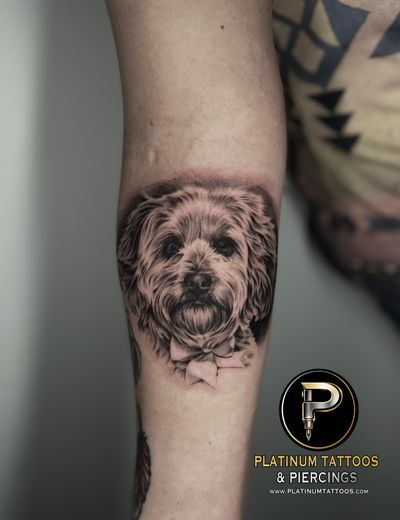
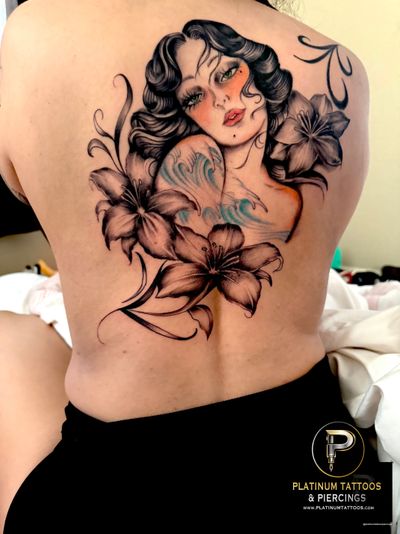
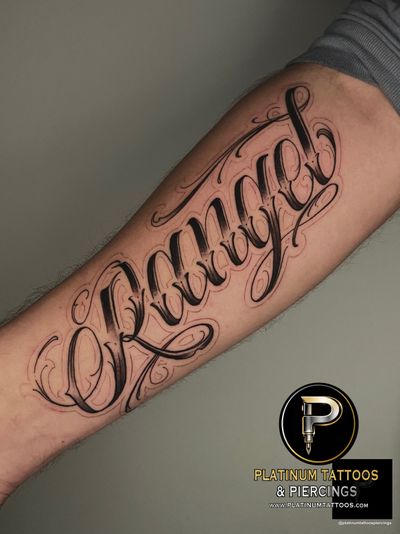
Scroll through tattoo content on any social platform and fine line work is everywhere — tiny botanicals on forearms, delicate script along collarbones, intricate single-needle portraits that look almost drawn in pencil. Fine line tattoos have had a cultural moment over the past five years, and for good reason: when done well, they're genuinely stunning.
But they come with considerations that bolder styles don't. At Platinum Tattoos & Piercings on Loop 410 in San Antonio, we want you making an informed choice — not just chasing a trend.
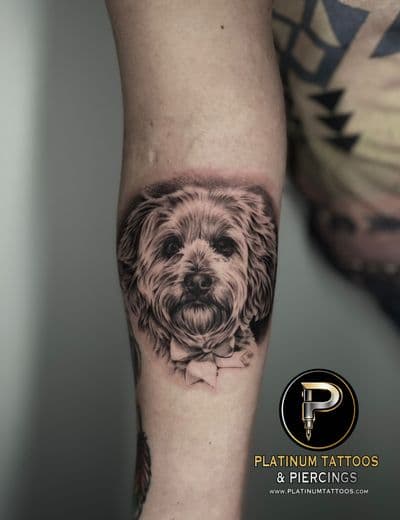
What Defines Fine Line Tattooing
Fine line tattooing is exactly what it sounds like: work executed with extremely thin needles — typically a 1RL (one round liner) or 3RL — to create lines that are as narrow as possible. The resulting aesthetic is delicate, precise, and detailed in a way that feels fundamentally different from Traditional or even Neo-Traditional work.
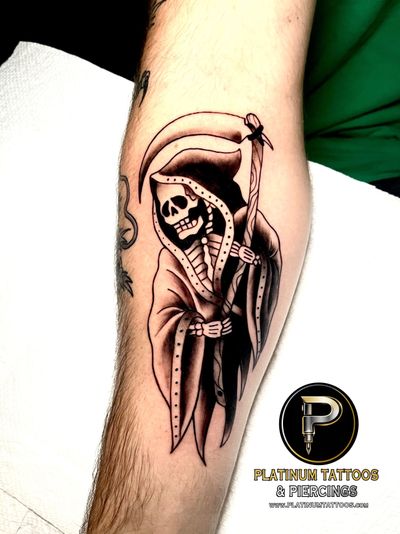
Where Traditional relies on bold outlines to define forms, fine line work creates images through very thin lines, subtle shading, and often a deliberate sparseness — negative space becomes part of the composition. Subjects range from minimalist botanical sketches to highly detailed single-needle portraits, from fine script to complex geometric mandalas rendered in lines barely thicker than a hair.
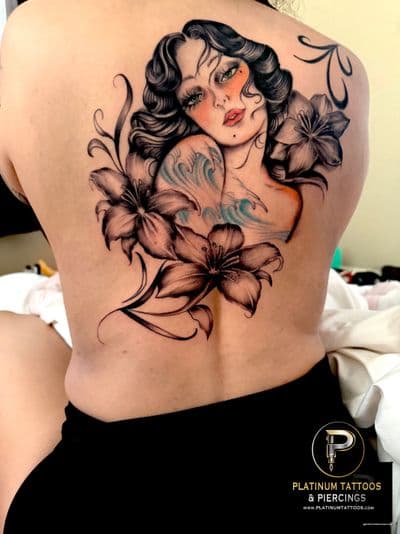
The technique demands extreme needle control and a light touch. Too much pressure and the needle goes too deep, causing lines to blow out and blur. Too little and the ink doesn't seat properly, leading to patchy areas that heal unevenly. The margin for error is narrower than in any other style.
Best Placements for Fine Line Work
Placement matters more for fine line than for almost any other style. The skin in different areas of the body behaves very differently, and fine line work responds to those differences dramatically.
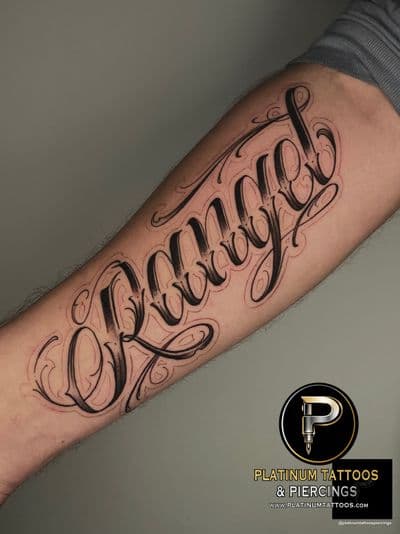
Excellent placements: the forearm, upper arm, outer thigh, shoulder blade, upper back, and ribcage. These areas have relatively stable skin that doesn't move excessively or experience constant friction. Fine lines seat well here and heal predictably.
Challenging placements: fingers, hands, feet, inner wrists, inner elbows, and behind the knees. These spots experience constant movement, friction, or moisture — all of which degrade fine line work faster. Finger and hand tattoos in particular are notorious for fading and blurring within months, regardless of style, but fine line work suffers especially in these areas. If you're committed to a finger or hand placement, go in knowing touch-ups will be more frequent.
The collarbone and sternum are popular fine line placements that sit somewhere in the middle — they can work beautifully, but the bony surface makes for a different needle experience and requires a skilled hand.
The Longevity Question
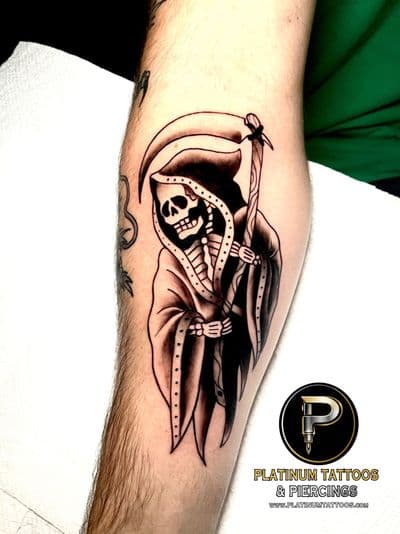
Let's be honest about this: fine line tattoos are generally the least durable style over the long term. That's not a knock on fine line — it's a product of the physics involved. Thin lines have less ink mass than thick lines. Less ink mass means less material holding the design in place as your skin ages, stretches, and regenerates over decades.
In the best-case scenario — ideal placement, proper aftercare, minimal sun exposure, good skin hydration over the years — a fine line tattoo will soften slightly and may develop a subtle vintage quality. In a less-than-ideal scenario, lines can blur into each other, lose crispness, or fade to near-invisibility in some areas.
This isn't a reason not to get fine line work. It's a reason to get it done well, on the right placement, by an artist who understands the style — and to follow the aftercare instructions precisely.
Aftercare Specifics for Fine Line Tattoos
Fine line tattoos need the same fundamental aftercare as any tattoo: keep it clean, keep it moisturized, don't pick at it. But a few things deserve extra emphasis.
Sun protection is non-negotiable. Fine lines fade faster than bold work when exposed to UV. During healing, keep it covered or use SPF 50+. After healing, make sunscreen on tattooed skin a regular habit.
Don't over-moisturize. Fine line work doesn't need to be soaked in lotion. A thin layer of fragrance-free moisturizer 2–3 times a day is plenty. Too much moisture during healing can actually pull ink out of fine work.
Touch-ups are normal. Many fine line artists build a touch-up into the process, scheduled 3–6 months after the initial session once the tattoo has fully healed. If your artist offers this, take it — it's part of making the piece right, not an indication that anything went wrong.
Booking Fine Line at Platinum
Fine line is a specialized skill. Our artists who work in this style have the needle control and light touch required to execute it properly. Bring reference images to your consultation — the more specific you can be about the aesthetic you want, the better the design process goes.
Service fees start at $35. We're at 5545 NW Loop 410, and consultations are always free. If you've been thinking about a fine line piece, come in and let's talk through your options — placement, sizing, design — before you commit.
Frequently Asked Questions
Do fine line tattoos fade faster than other styles?
They can, yes. The ultra-thin lines have less ink mass than bold Traditional lines, which means they can soften, blur, or fade more noticeably over time — especially in high-friction areas like fingers, wrists, and inner elbows. Sun exposure accelerates this. Proper aftercare and sunscreen are essential.
What are the best placements for fine line tattoos?
Areas with stable skin and minimal daily friction work best: the forearm, upper arm, ribcage, upper back, shoulder blade, and outer thigh. Avoid hands, fingers, feet, and inner joints for fine line work — those areas experience constant movement and friction that breaks down delicate linework quickly.
Can fine line tattoos be touched up?
Yes. Most fine line artists recommend a touch-up session 3–6 months after the original session, once the tattoo has fully healed and settled. This is standard practice and not a sign of poor work — it's part of the fine line process.
How is fine line different from single needle tattooing?
They're closely related. Single needle tattoos use a single needle for the entire piece, producing the finest possible lines. Fine line work generally refers to the aesthetic — extremely thin lines and delicate detail — and may use a 1RL or 3RL needle configuration depending on the design.
Book a Consultation
Free consultations for custom tattoos. Walk-ins welcome, or book ahead to secure your artist at Platinum Tattoos & Piercings.
📍 5545 NW Loop 410, San Antonio, TX 78238