Your First Piercing: Everything You Need to Know
Getting your first piercing is exciting — and a little nerve-wracking. Here's everything you need to know before you walk through the door.
So you've decided to get a piercing. Great choice. Whether it's a simple earlobe or something a little more adventurous, a piercing is a meaningful way to express yourself — and when done right by a professional, it's a safe and straightforward experience. This guide covers everything you need to know before, during, and after your first piercing. At Platinum Tattoos & Piercings on Loop 410, we've been piercing San Antonio since 2000, and our piercers have seen (and fixed) it all. Let's make sure yours goes right from day one.Your First Piercing: Everything You Need to Know
Before Your Appointment
Eat a Meal First
Seriously — don't come in on an empty stomach. Low blood sugar can cause lightheadedness or fainting, especially if you're nervous. A full meal 1–2 hours before your appointment is the single best thing you can do to ensure a smooth experience.
Stay Hydrated
Drink water. Dehydration makes everything worse, including piercing experiences.

Skip the Alcohol
Alcohol thins your blood and impairs your judgment. Don't drink before a piercing. We won't pierce you if we suspect you're intoxicated — it's not safe for you.
Do Your Research
Know what you want. Look at photos. Think about placement. It helps to come in with a clear idea, though your piercer can absolutely guide you if you're undecided.
Pain Levels by Piercing Type
Everyone's pain tolerance is different, but here's a general guide:
| Piercing | Pain Level | What It Feels Like |
|---|---|---|
| Earlobe | ⭐ (1/5) | Quick pinch, done in a second |
| Nostril | ⭐⭐ (2/5) | Sharp pinch, may cause eye watering |
| Septum | ⭐⭐ (2/5) | Eye-watering, but brief — the sweet spot is less sensitive than you think |
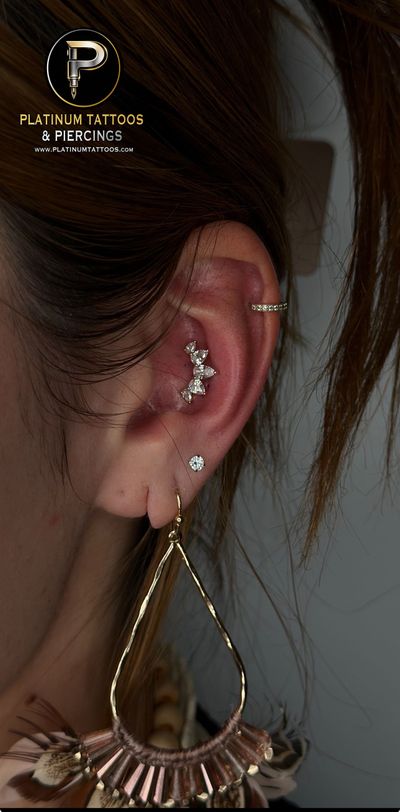
| Helix (outer ear cartilage) | ⭐⭐ (2/5) | More pressure than pain; slight ache afterward |
| Tragus | ⭐⭐⭐ (3/5) | Satisfying crunch sensation, moderate ache |
| Daith | ⭐⭐⭐ (3/5) | Deeper pressure due to cartilage thickness |
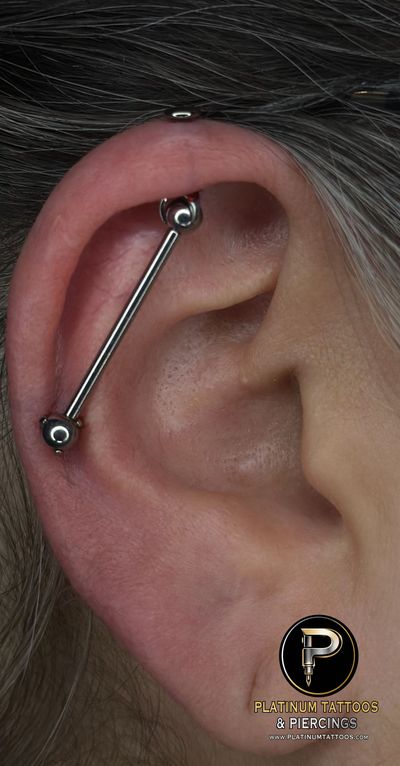
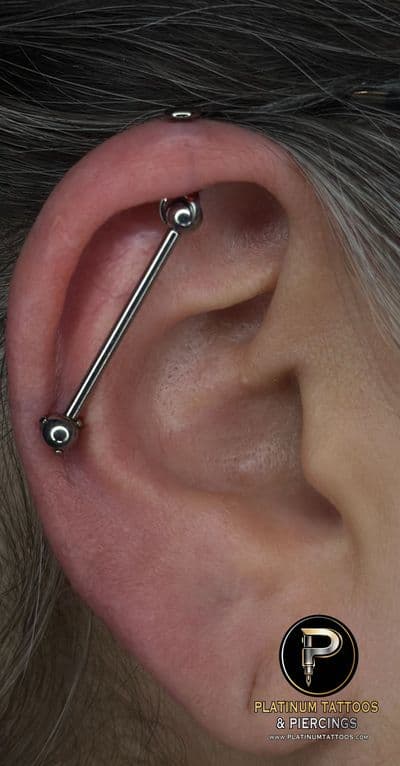
| Industrial | ⭐⭐⭐ (3/5) | Two piercings in one — more intense, longer soreness |
| Navel | ⭐⭐ (2/5) | Surface pinch — brief, localized |
How to Choose Jewelry
Your initial jewelry matters. A lot. Cheap or inappropriate jewelry is one of the top causes of piercing problems. Here's what to know:
Safe Initial Materials
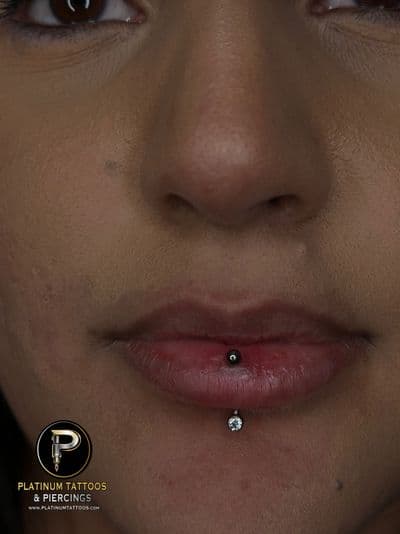
- Implant-grade titanium (ASTM F136): Best choice. Hypoallergenic, lightweight, comes anodized in colors.
- Solid 14k or 18k gold: Excellent for healed piercings. Make sure it's solid gold, not gold-plated.
- Implant-grade niobium: Great alternative to titanium for sensitive skin.
What to Avoid
- Mystery metal "surgical steel" (unspecified grade)
- Acrylic, plated, or coated jewelry
- Jewelry bought from gas stations or mall kiosks
- Anything with a "mystery" finish — if the metal isn't named, it's a red flag
At Platinum, we use implant-grade titanium and solid gold from reputable suppliers. We won't put sketchy metal in your body.
Aftercare Basics
The One Rule: Saline, Leave It Alone
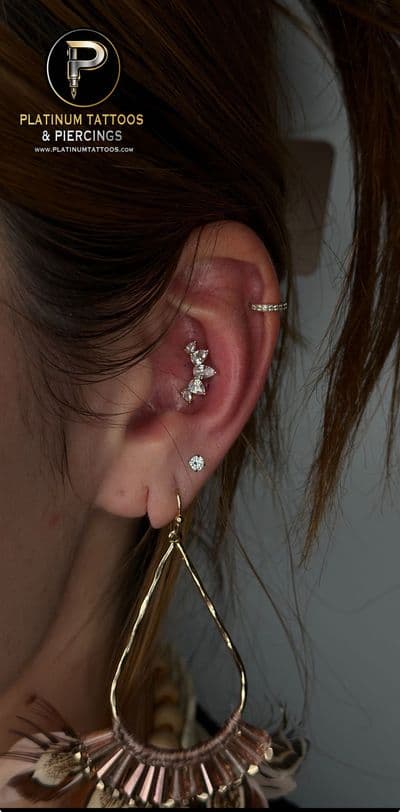
Rinse with sterile saline (like NeilMed Wound Wash) twice a day. That's it. Gently spray, let it air dry. Don't rotate the jewelry — that's old advice that actually disrupts healing. Don't pick or twist. Don't over-clean.
What NOT to Do
- ❌ Don't use hydrogen peroxide, alcohol, or Bactine — too harsh, they kill cells that help healing
- ❌ Don't use antibacterial soap on the piercing
- ❌ Don't twist or rotate the jewelry
- ❌ Don't let hair products, makeup, or sunscreen contact the piercing
- ❌ Don't sleep on a new cartilage piercing (use a travel pillow with a hole if needed)
- ❌ Don't submerge in pools, lakes, or hot tubs during healing
What's Normal vs. What's Not
Normal
- Mild redness and swelling in first 1–2 weeks
- Clear or whitish discharge (lymph fluid) — this is crust, not pus
- Some tenderness when bumped
- Itchiness as it heals
See Your Piercer If...
- You see spreading redness, warmth, or red streaks
- There's thick yellow or green discharge
- Swelling is getting worse after the first week, not better
- You develop a fever
- The jewelry seems to be migrating or getting pulled into the skin

FAQ
Can I get multiple piercings in one visit?
Yes — many clients get two or three at once. More than three isn't recommended, as your body has more to heal. Talk to your piercer about what makes sense for your anatomy.
How soon can I change my jewelry?
Not until fully healed — even if it looks healed on the outside. Changing too early is one of the biggest causes of delayed healing and irritation bumps. Ask your piercer, not the internet.
What's the price range?
At Platinum, most piercings range from $30–$80 depending on location and jewelry. We'll always be upfront about pricing before we pierce you.
Ready? Come see us at 5545 NW Loop 410, San Antonio, TX 78238. Walk-ins welcome. We'd love to be your first.
Frequently Asked Questions
Does getting a piercing hurt?
Most piercings involve a brief sharp pinch that lasts less than a second. Pain levels vary by location — earlobes are mild, cartilage is moderate, and septum piercings can cause temporary eye-watering. The anticipation is usually worse than the actual piercing.
How old do you have to be to get a piercing?
In Texas, minors under 18 can get piercings with a parent or guardian present who provides written consent and a valid ID. Lobes are the most common piercing for minors.
What jewelry should I get for my first piercing?
Implant-grade titanium is the gold standard for initial piercings — it's hypoallergenic, lightweight, and comes in a variety of colors. Avoid mystery metals, surgical steel of unknown grade, and anything coated or plated.
How long does a piercing take to heal?
Healing times vary widely. Earlobes heal in 6–8 weeks. Cartilage piercings take 6–12 months. Septum piercings heal in 6–8 weeks. Surface piercings can take up to a year or more.
Book Your Piercing
Walk-ins welcome for piercings. Book ahead to reserve your spot at Platinum Tattoos & Piercings.
📍 5545 NW Loop 410, San Antonio, TX 78238