Japanese Tattoos (Irezumi): History, Symbolism & Modern Interpretation
Japanese tattooing (Irezumi) is one of the most technically demanding and symbolically rich styles in the world. From koi fish to samurai, every element carries meaning — and the results are breathtaking.
Japanese Tattoos (Irezumi): History, Symbolism & Modern Interpretation
Japanese tattooing occupies a unique place in the global tattoo world. Other styles developed their rules over decades; Japanese tattooing has been refining its visual language for over a thousand years. The result is a style so complete, so internally coherent, and so visually powerful that it has influenced virtually every other tradition in tattooing — and continues to do so today.
At Platinum Tattoos & Piercings on NW Loop 410 in San Antonio, Japanese-style work is some of the most ambitious and rewarding work we do. Here's what you should know before booking.

A Brief History of Irezumi
The Japanese term irezumi literally means "to insert ink" — and the practice has roots stretching back to at least the Yayoi period (300 BCE to 300 CE), when tattoos indicated social status and spiritual protection. By the Edo period (17th–19th centuries), tattooing had developed into the sophisticated style we recognize today, heavily associated with the ukiyo-e woodblock print tradition that defined the era's visual culture.
The imagery — dragons, koi, tigers, cherry blossoms, waves, samurai — came directly from woodblock prints. The bold outlines, the flat fills contrasted with dynamic backgrounds, the use of the body as a three-dimensional canvas: all of it emerged from artists translating woodblock aesthetics into skin. By the 19th century, Japanese tattoo masters (horishi) had developed an entire compositional philosophy — how motifs should flow with the body's contours, which elements traditionally pair together, how backgrounds like irezumi waves and botan peonies frame the primary subject.
That philosophy has survived to the present day and still guides artists working in the Japanese tradition worldwide.
Common Motifs and Their Meanings
Koi (carp). One of the most popular Japanese tattoo subjects globally. Koi represent perseverance, strength, and transformation — drawn from the legend of the koi that swam upstream and transformed into a dragon. Color carries additional meaning: red for passion and love, black for successfully overcoming adversity, gold for prosperity.

Dragon (Ryū). The Japanese dragon is very different from its Western counterpart — not a creature to be feared and slain, but a powerful, wise, and benevolent force. Japanese dragons are protectors, associated with water, wisdom, and strength. They're a popular choice for sleeves and back pieces because their serpentine forms flow naturally with the body.
Cherry blossoms (Sakura). The ephemeral beauty of cherry blossoms makes them a symbol of the fleeting nature of life — a theme deeply embedded in Japanese philosophical tradition. As tattoo elements, sakura blossoms work as both primary subjects and background fill, providing delicate contrast to bolder figures.
Waves (Nami). Great Wave-style compositions — inspired directly by Hokusai — are iconic in Japanese tattooing. Waves represent both the power and the impermanence of nature, and they function brilliantly as background elements that give movement and energy to a composition.

Tiger (Tora). Tigers in Japanese iconography represent strength, courage, and protection against evil spirits. They're often paired with bamboo or depicted in a striking pose that makes them ideal for arm and leg panels.
Peony (Botan). The king of flowers in Japanese culture — a symbol of wealth, nobility, and good fortune. Peonies are frequently paired with other motifs like tigers and samurai as both companions and background elements.
Sleeve Culture and Large-Scale Japanese Work
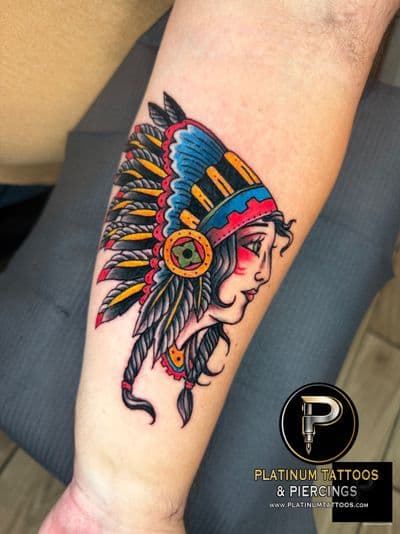
Japanese tattooing developed a compositional philosophy built around the idea of full coverage — the body suit (horimono) represents the ultimate expression of the style. Even if you're not going that far, the Japanese approach to sleeves and back pieces reflects this underlying philosophy: motifs are chosen and placed to work together, flow with the body's natural lines, and create a unified composition rather than a collection of separate images.
A Japanese sleeve isn't just "a bunch of Japanese-themed tattoos on an arm" — it's a curated ecosystem of symbols that relate to each other. Working with an artist who understands this philosophy produces a dramatically more cohesive and impactful result than working with one who doesn't.
How the Style Translates in San Antonio

Japanese tattooing has been embraced worldwide, including in San Antonio's vibrant tattoo community. Our artists bring knowledge of traditional Japanese compositional rules to every piece — whether you're starting a full sleeve or just adding a standalone koi on your forearm. We adapt the style to Western body placement and client preferences while respecting the underlying design language that makes Japanese work so visually powerful.
Come in for a consultation. Service fees start at $35. For sleeve projects, we'll plan the whole composition before touching needle to skin — it makes a significant difference in the final result. Find us at 5545 NW Loop 410, seven days a week.
Frequently Asked Questions
What does a koi fish tattoo symbolize in Japanese style?
Koi fish represent perseverance, strength, and transformation. In Japanese mythology, a koi that swam upstream and leaped over a waterfall transformed into a dragon — making koi tattoos a symbol of overcoming adversity. The color of the koi also carries meaning: red for love, black for overcoming obstacles, gold for wealth and prosperity.
How long does a Japanese sleeve tattoo take?
A full Japanese sleeve is a major commitment — typically 20–40+ hours of work spread across multiple sessions over 6–18 months, depending on complexity and how quickly your skin heals between sessions. Rushing a Japanese sleeve leads to overworked skin and muddy color. Patience is part of the process.
What's the difference between a traditional Japanese tattoo and a Western interpretation?
Traditional Japanese tattooing (Tebori or Irezumi) uses hand-poking techniques and follows strict compositional rules developed over centuries. Western interpretations keep the iconography and bold aesthetic but use modern machines and may adapt compositions for Western body placement and client preferences. Both can be beautiful — what matters is the artist's understanding of the style.
Do Japanese tattoos age well?
Yes — Japanese tattooing is one of the best-aging styles. The bold black outlines hold their shape for decades, and the large color fields maintain vibrancy well with proper sun protection. Background elements like clouds, waves, and wind bars help frame the composition even as fine detail softens over time.
Book a Consultation
Free consultations for custom tattoos. Walk-ins welcome, or book ahead to secure your artist at Platinum Tattoos & Piercings.
📍 5545 NW Loop 410, San Antonio, TX 78238