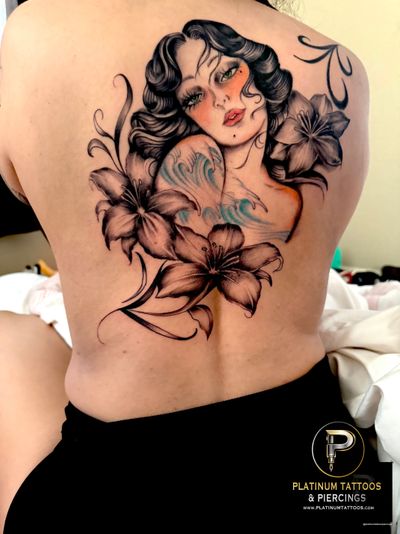
Neo-Traditional Tattoos: The Modern Evolution of a Classic
Neo-Traditional tattoos keep the bold lines and iconic imagery of classic American Traditional but push further — expanded color palettes, deeper dimension, and more elaborate design. It's the best of both worlds.
Neo-Traditional Tattoos: The Modern Evolution of a Classic
Every art form evolves. What starts as a set of established rules eventually becomes the foundation that new artists build on — keeping what works, discarding what limits them, and adding what the times demand. Neo-Traditional tattooing is exactly that story: a generation of artists who loved the structure of American Traditional but weren't content to stay inside its original boundaries.
At Platinum Tattoos & Piercings on NW Loop 410 in San Antonio, Neo-Traditional is one of the most-requested styles we work in. Here's why.

How Neo-Traditional Evolved from the Classic
American Traditional tattoos had been the dominant style for most of the 20th century — bold outlines, flat color fills, iconic imagery, no shading to speak of. The style was effective and enduring, but by the 1980s and '90s, a new wave of tattoo artists started asking: what if we kept the bold lines but added everything else?
Neo-Traditional emerged as the answer. Artists maintained the thick black outlines that give Traditional its structure and longevity. But they opened up the color palette dramatically — from the classic red/yellow/green/blue to jewel tones, earthy terracottas, muted teals, and rich purples. They added shading to create depth and dimension. They incorporated botanical detail, fine linework within compositions, and a new decorative vocabulary pulled from Art Nouveau, illustration, and tattoo culture itself.
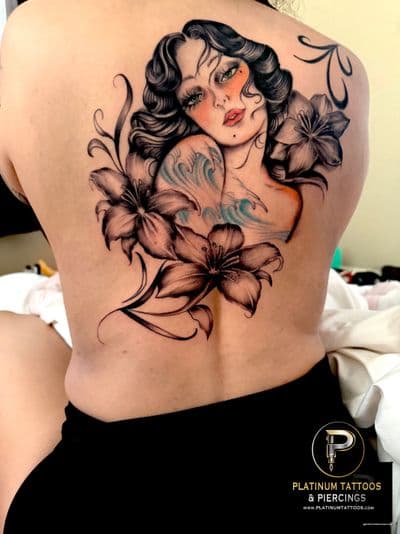
The result is a style that feels both timeless and contemporary — recognizably rooted in Traditional, but unmistakably modern in execution.
The Expanded Color Palette
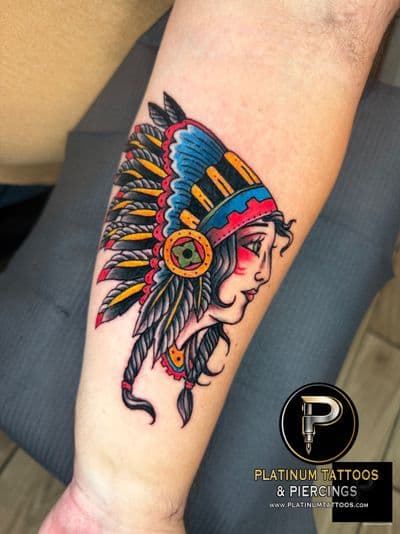
If Traditional's color language is primary school — red, yellow, blue — Neo-Traditional is the full spectrum. Artists working in this style can pull from burgundies and magentas, forest greens and sage, cobalt blues and lavenders, burnt oranges and dusty pinks. Colors are still applied with intention and often with a saturated, illustrative quality rather than a painterly blend — but the range is vastly wider.
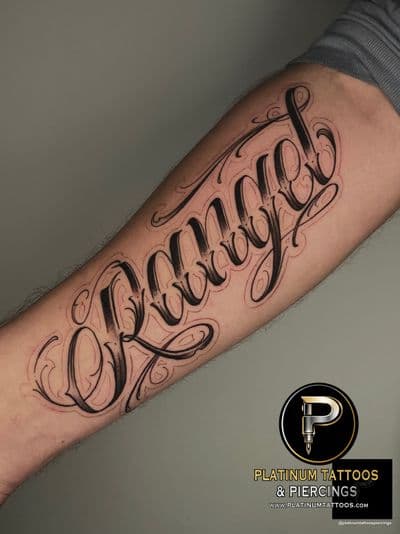
This expanded palette is one of the main reasons people gravitate toward Neo-Traditional. You can have the boldness and structure of a Traditional piece while still getting colors that complement your skin tone or fit within a more personal aesthetic.
More Detail, More Dimension
Where Traditional relies on flat fills and strong silhouettes, Neo-Traditional incorporates shading — whether that's subtle gradient work within color blocks, or more involved three-dimensional rendering that gives petals, fur, feathers, and faces a sense of depth. Compositions are often more complex, with layering, background elements, and foreground detail that wouldn't fit inside a Traditional framework.

Common Neo-Traditional subjects include: detailed florals and botanicals, animal portraits (owls, wolves, foxes, big cats), stylized human faces, skulls with decorative elements, and architectural or geometric motifs integrated with organic forms. The style lends itself naturally to sleeve work and larger panel pieces because the detail rewards close viewing.
Popular Subjects in Neo-Traditional Work
The Neo-Traditional vocabulary pulls from a rich mix of inspirations. Floral arrangements — especially roses, peonies, and wildflowers — are perennial favorites because the style allows for both bold structure and delicate petal detail. Animals are another strong suit: a Neo-Trad wolf or owl has presence and dimension that flat Traditional work can't quite achieve. Human faces — portraits in a stylized, slightly idealized manner — also work beautifully in this style, occupying a space between realism and illustration.
Thematic pieces are also popular. Celestial imagery (moons, stars, astronomical elements) combined with florals. Gothic or occult motifs rendered with decorative flair. Fantasy-inspired creatures and scenes given weight and texture. Neo-Traditional handles all of these with grace.
Why Book Neo-Traditional at Platinum
This style requires an artist who understands both traditional structure and the rendering techniques needed to add dimension — it's a more demanding skill set than straight-ahead Traditional. Our artists Remy, Skar, and Jordan have all worked extensively in Neo-Traditional and can show you portfolios of completed pieces across a range of subject matter and scale.

We're at 5545 NW Loop 410, open seven days. Service fees start at $35. Walk-ins welcome, though for anything detailed or custom, we recommend booking a consultation first so the artist has time to prepare a design before your appointment day.
What to Expect When Getting a Neo-Traditional Tattoo
Larger Neo-Traditional pieces often require multiple sessions — not because the artist is slow, but because you want to give heavily worked areas time to heal before coming back in for additional passes. Rushing a complex color piece risks overworking skin that hasn't recovered yet.
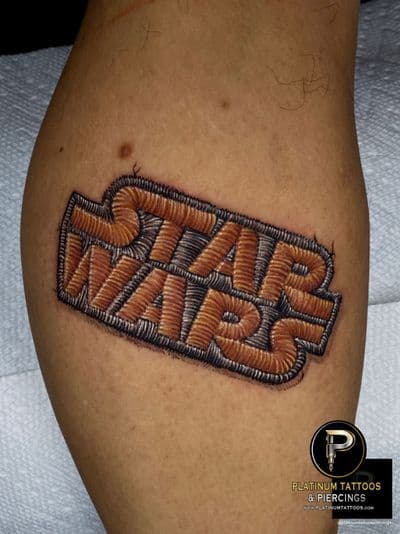
Healing follows the same basic pattern as any tattoo: keep it clean, moisturized, and out of the sun. The color richness of Neo-Traditional work rewards proper aftercare — take care of it in those first few weeks and you'll end up with something you'll be proud to show off for the rest of your life.
Frequently Asked Questions
What's the difference between Traditional and Neo-Traditional tattoos?
Traditional (old school) uses a very limited color palette, minimal shading, and classic flat imagery. Neo-Traditional keeps the bold outlines but adds a wider range of colors, shading for dimension, and more intricate detail work — bridging old-school aesthetics with a modern sensibility.
How long does a Neo-Traditional tattoo take to heal?
Surface healing typically takes 2–4 weeks, but fully saturated Neo-Traditional pieces with heavy color packing may take up to 3 months for deep layers to fully settle. Follow your aftercare instructions and the results are worth it.
Does Neo-Traditional age as well as Traditional?
Very well, though slightly less so than pure Traditional. The bold outlines still hold up beautifully, but the finer details and gradient shading can soften a bit over time. Touch-ups every 5–10 years will keep a Neo-Trad piece looking sharp.
Can Neo-Traditional work on any placement?
It works on most placements, though larger Neo-Trad pieces shine on the thigh, upper arm, back, and chest where there's room for the composition to breathe. Our artists will help you scale the design appropriately for your chosen spot.
Book a Consultation
Free consultations for custom tattoos. Walk-ins welcome, or book ahead to secure your artist at Platinum Tattoos & Piercings.
📍 5545 NW Loop 410, San Antonio, TX 78238